- Palma (Fisioplanet)
- +34 645 54 16 98

Treatments That Enhance the Body’s Natural Repair Mechanisms
- PLATELET-RICH PLASMA (PRP) THERAPY Platelet-Rich Plasma (PRP) therapy is considered one of the most effective regenerative treatments for osteoarthritis and for tendon, ligament, and muscle injuries. It is also used to support recovery following fractures and surgical procedures.
PRP is an autologous biological therapy that promotes tissue regeneration by concentrating growth factors and other bioactive proteins naturally present in the patient’s blood plasma.
The resulting plasma contains an optimal concentration of these components, thereby enhancing healing and improving the outcomes of conventional clinical treatments.
How is the procedure performed?
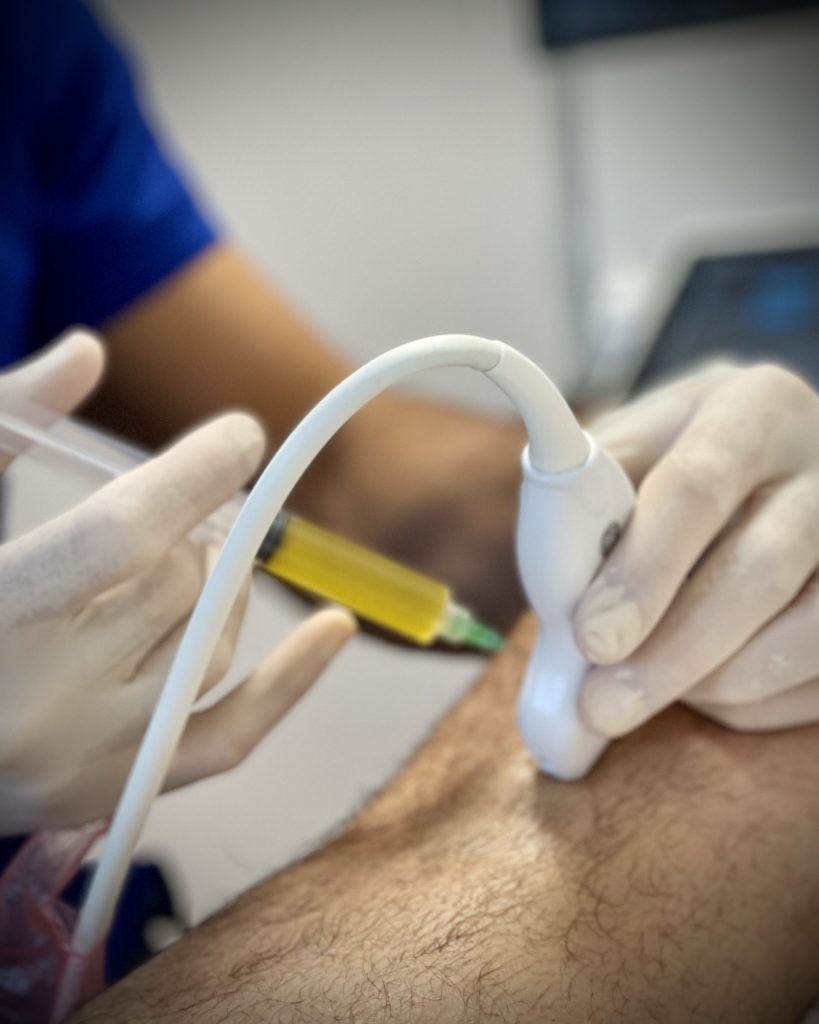
A small volume of the patient’s blood is collected and centrifuged to separate its cellular and plasma fractions. This process isolates a platelet-rich plasma layer, which is subsequently infiltrated into the affected tissue to stimulate repair and regeneration.
Technology used by Dr. Gustavo Lucas
Dr. Lucas uses PRGF–ENDORET® technology, developed by BTI(Biotechnology Institute, Vitoria – Basque Country), an internationally recognized leader in regenerative medicine with more than 20 years of scientific experience.This closed-system technology fulfills all regulatory requirements established by national and international authorities for the preparation of medicinal products for human use (CE marking).
- JOINT VISCOSUPPLEMENTATION
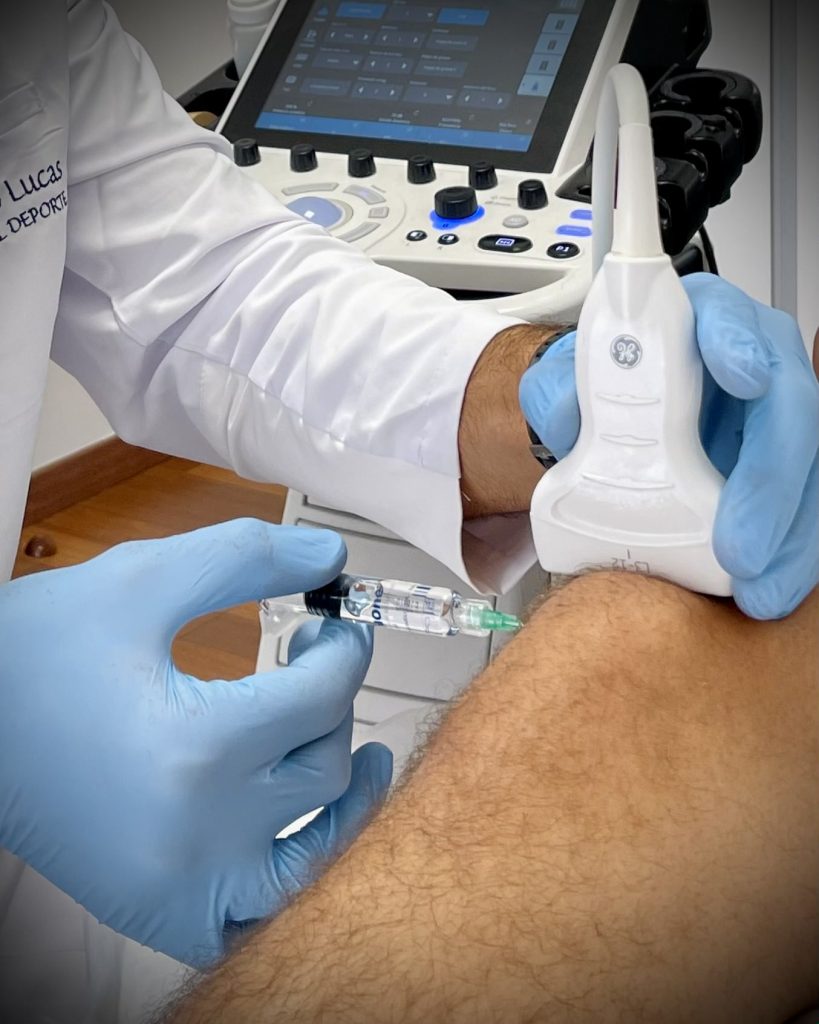
Joint viscosupplementation is a minimally invasive technique that consists of the intra-articular infiltration of hyaluronic acid..
Thanks to this treatment, it is possible to reduce joint pain and improve the functional and mechanical status of joints such as the knee, hip, ankle, and small peripheral joints. Additional benefits include improved synovial viscosity, reduced inflammation, and other local therapeutic effects.
Hyaluronic acid is a viscous, elastic substance physiologically produced by the joint and a natural component of synovial fluid. Owing to its elasticity, it changes configuration when subjected to mechanical deformation and is infiltrated intra-articularly in cases where the joint’s cartilaginous component has been lost or deteriorated.
It contributes to adequate lubrication, acts as a shock absorber for load transmission across the articular surfaces, minimizes friction to allow high-speed joint movement, and provides antiinflammatory and antinociceptive properties to the synovial fluid.
Each patient should undergo a thorough evaluation so that the most appropriate treatment can be recommended.