
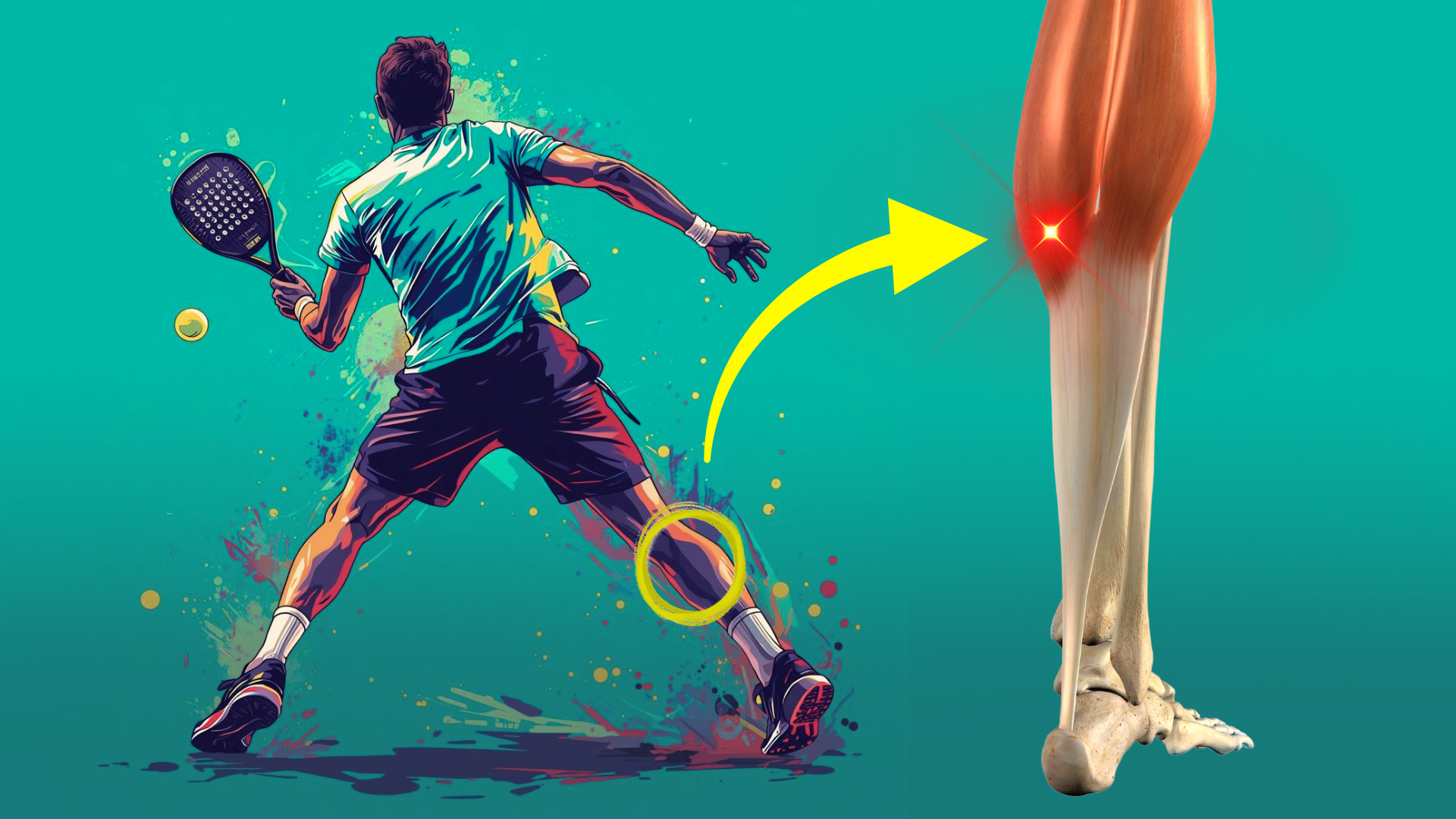

If you've felt a sharp or shooting pain in your calf while running or walking, it could be a very common injury known as Tennis Leg.
“Whiplash on the calf always has a cause.”
A calf strain should is one of the most frequent reasons for consultation in sports medicine. Many people describe it as:
- “A blow from behind”
- “A rock thrown at me”
- “A very strong pull”
- “A sharp pain that forced me to stop”
- “I felt like something broke”
Although it may seem serious, most of these cases correspond to an injury known as Tennis Legbut the patient is usually unaware of this term.
Here we clearly explain what that pain means, why it occurs, and what the most effective treatment is to help you recover without relapses..
What does that twinge in my calf mean?
In the vast majority of cases, a sudden sharp pain in the calf is a partial tear of the medial gastrocnemius muscle..
This muscle stretches or contracts sharply during:
- Running
- Padel
- Tennis
- Soccer
- Uphill Running
- Jumping
- Explosive
Movements Tennis Legbut the initial sensation is what makes the patient seek help: the pinching or whipping..
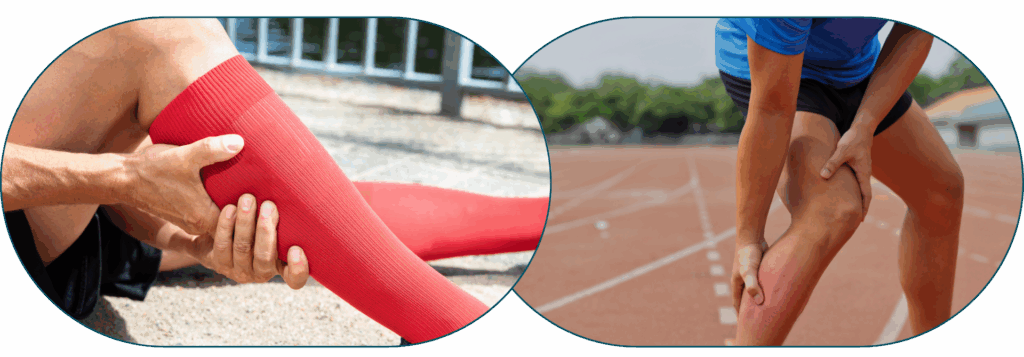
Most typical symptoms
✔ 1. A sudden stabbing or shooting pain
A sharp pain is felt, as if “something were snapping.”
✔ 2. Difficulty continuing to walk or run
The person usually has to stop the activity immediately.
✔ 3. Swelling
Sometimes it appears within minutes, and other times throughout the day.
✔ 4. Pain when putting weight on or extending the leg
Especially when going down stairs.
✔ 5. A feeling of tightness or weakness
The calf feels “loose” or “heavy.”
Most common causes
- Lack of warm-up
- Poor physical condition
- Explosive movements (sprints)
- Sudden changes of direction
- Muscle fatigue
- Intense training
- Running with cold feet or inappropriate footwear
- Recreational sports (very common in padel, tennis, and running)
It can even happen while taking a quick step on the street or going down stairs
How is it diagnosed (accurately)
✔ Clinical evaluation
A specialist identifies the exact point of pain and investigates how it occurred (mechanism of injury).
✔ Musculoskeletal ultrasound
It is the fundamental test because it confirms the type and severity of the break::
- Size
- Location
- Presence of hematoma
- Severity of injury
It also rules out injuries that could be confused with a Tennis Leg:
- Soleus muscle rupture
- Deep vein thrombosis
- Achilles tendon injury
- Severe muscle contractures
A correct diagnosis prevents errors and speeds up recovery.
Most effective treatment for calf strain
1. Initial phase (first 48–72 h)
- Drain the hematoma (if present)
- Relative rest (minimize movement)
- Apply gentle ice if it provides relief
- Apply light compression (bandage or compression stockings)
- Avoid strenuous stretching
This phase protects the muscle and prevents the injury from worsening.
2. Specialized Physiotherapy
Essential to avoid non-functional internal scarring that can cause relapses.
Includes:
- Gentle manual therapy
- Muscle release
- Electrotherapy
- Gentle active therapy
- Pain-free exercise progression
3. Strengthening exercises
When pain allows, the following are added:
- Isometric, concentric, and eccentric exercises
- Strengthening the soleus muscle (key to preventing relapses)
- Proprioceptive training
- Gait retraining
4. PRP (Platelet-Rich Plasma) in moderate cases o severos
If the injury is more serious or the patient needs to recover faster and with a lower probability of relapse, PRP (platelet-rich plasma) accelerates tissue repair, reduces pain, and improves healing.
It is an outpatient procedure, guided by ultrasound and virtually painless.
5. Gradual return to activity
Do not run or jump until:
- There is no pain,
- strength has been restored,
- and the specialist authorizes it.
Running before the appropriate time causes relapses.
Recovery time
It depends on the severity of the injury, the type of sport, and the demands placed on the athlete:
- Mild: 3-4 weeks
- Moderate: 4-8 weeks
- Severe: 8-12 weeks
Without proper physiotherapy and rehabilitation, these recovery times tend to be longer.
Hematoma recurrence is also a common factor in delaying recovery. This underscores the importance of follow-up ultrasound scans throughout the rehabilitation process.
When should you see a specialist?
- If the pain was sudden and intense
- If you are limping or cannot put weight on your foot properly
- If swelling or bruising appears
- If the pain does not improve in 5–7 days
- If you want to return to sports safely
- If you suspect something has broken
A correct assessment completely changes the course of recovery.
Conclusion
A calf strain should not be ignored. Although it is a very common injury, a proper evaluation and personalized treatment prevent relapses and allow a safe return to sport.
I usually tell my patients: "a pinch in the calf is an injury until proven otherwise," meaning it's best to see a specialist for a proper diagnosis.
A Tennis Leg It has an excellent prognosis when properly diagnosed and treated by specialists in sports medicine and physiotherapy.
Follow me on Instagram – Click here
If you need an appointment, Contact us here.