
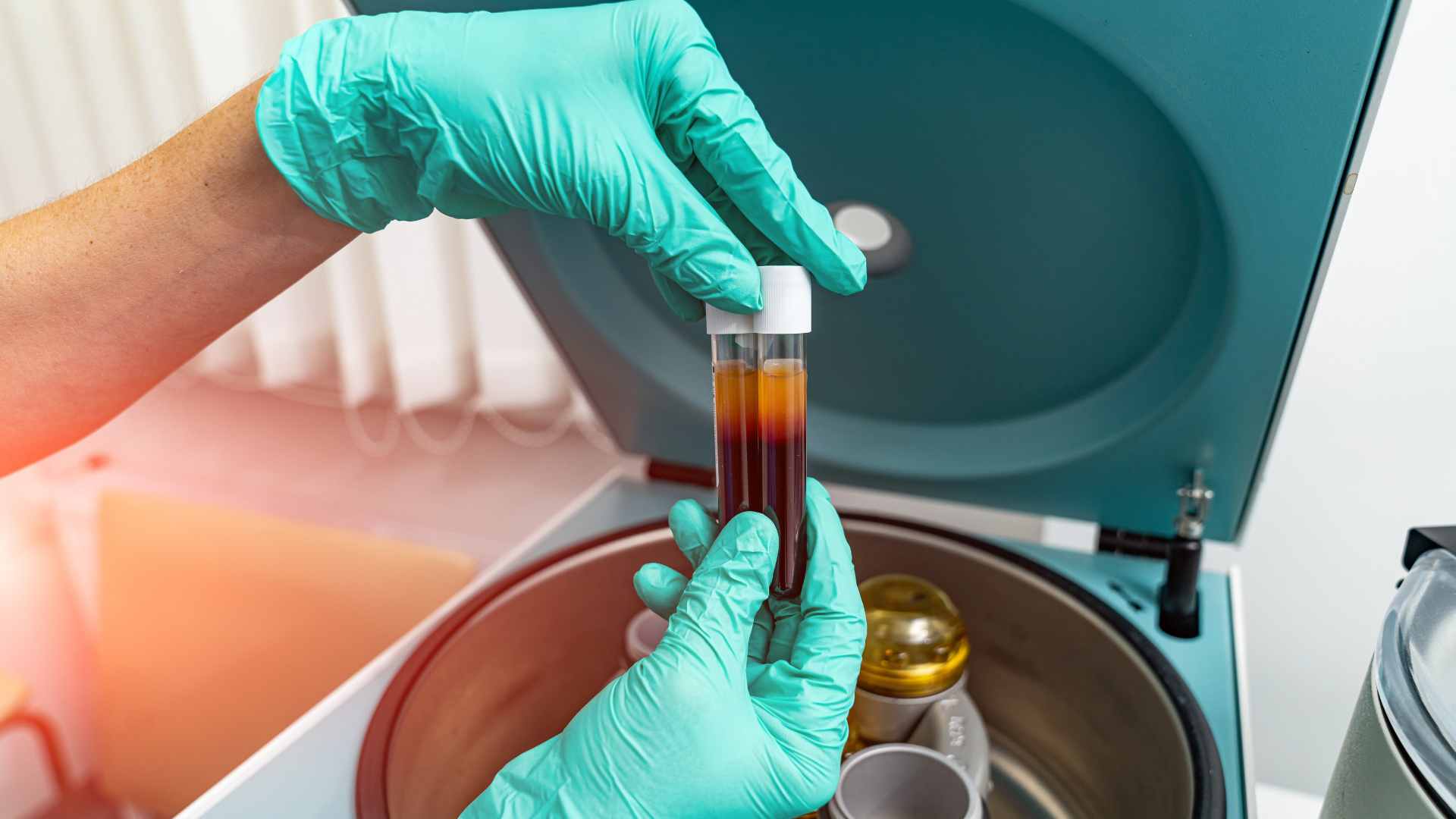

What is this Regenerative Therapy? An honest explanation of PRP: how it works, when it helps, and what you can really expect from the treatment.
“PRP is not magic, it's biology used well.”
What is PRP?
PRP, platelet-rich plasma, is a platelet concentrate obtained from the patient's own blood. It is an advanced and effective therapy in regenerative medicine and sports medicineHow does it work? It uses biological components from the patient's own body to accelerate tissue repair, reduce inflammation and improve function without the need for surgery.
What does it actually do to your body?
PRP is all the rage. We hear about it from athletes, clinics, and even in gym conversations. But… what does it actually do to your body?
I'll tell you without making a big deal out of nothing and without using fancy words.
1. PRP helps to "sort out" inflammation
When tissue is injured, it becomes inflamed. But sometimes that inflammation becomes chronic, and the body no longer knows what to do about it.
PRP acts as a “reminder” for the tissue:
—Hey, it's time to fix things, not stay angry—.
the PRP does not mask symptomsit acts directly on tissue repair and helps guide it towards healing.
2. PRP activates the cells it repairs
Inside your platelets there are tiny chemical “instructions”.
When PRP is injected, these signals reach the tissue and tell the cells:
“Get to work: rebuild, repair, and better organize this tendon or muscle.”
This does not mean that PRP will "create new tissue from scratch," but it can improve how it recovers.
3. Improves the environment of the injured area
Imagine the injury is a dry garden.
PRP doesn't bring new plants, but it does provide irrigation, nutrients, and tools so that what's already there can grow better.
More irrigation → more oxygen → better repair.
In other words, it creates the ideal scenario for your body to do its job.
4. The pain usually subsides… but not on the first day
PRP is not an immediate pain reliever.
It's not like an anti-inflammatory or a corticosteroid injection.
When it works, it does so over several weeks, because the tissue gradually improves.
It's more of a process than a patch.
5. In the joints, it can improve “lubrication”
In cases such as osteoarthritis, PRP does not rebuild lost cartilage.
But it can improve the quality of the synovial fluid — the one that acts as “oil” —.
This helps the joint move better and hurt less.
6. It doesn't bond complete breaks
This is important: PRP does not mend torn tendons, nor does it rebuild serious injuries on its own.
Its role is to help when tissue is damaged, irritated, or does not fully repair itself, but it doesn't perform miracles.
7. It works better for some injuries than for others.
Where it tends to work best (with more evidence):
- mild/moderate knee osteoarthritis
- Chronic tendinopathies: epicondylitis of the elbow (tennis elbow), plantar fasciitis and rotator cuff, patellar and Achilles tendons, in this order.
- other osteoarthritis, minor joints (with caution).
Situations with still limited or inconsistent evidence:
- acute muscle injuries
- degenerative/horizontal meniscal lesions
Where the evidence does not justify high expectations:
- severe breaks
- complete breaks
- severe structural degeneration (advanced osteoarthritis)
How is PRP obtained and applied?
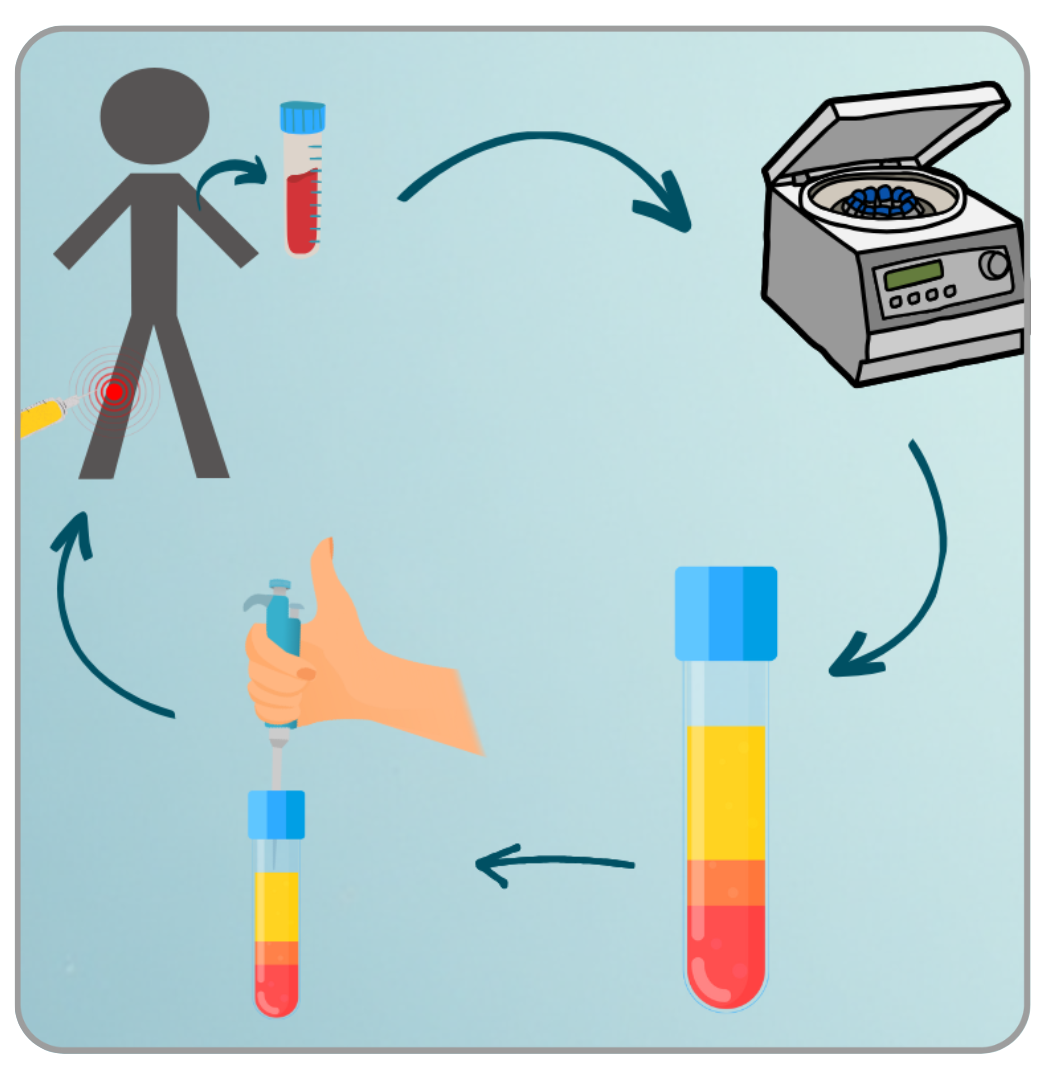
The procedure is simple, quick and safe:
A. Extracción de sangre
A small amount of blood is taken from the patient's arm.
B. Centrifugation
The blood is processed to separate and concentrate the platelets.
C. Preparation of platelet-rich plasma
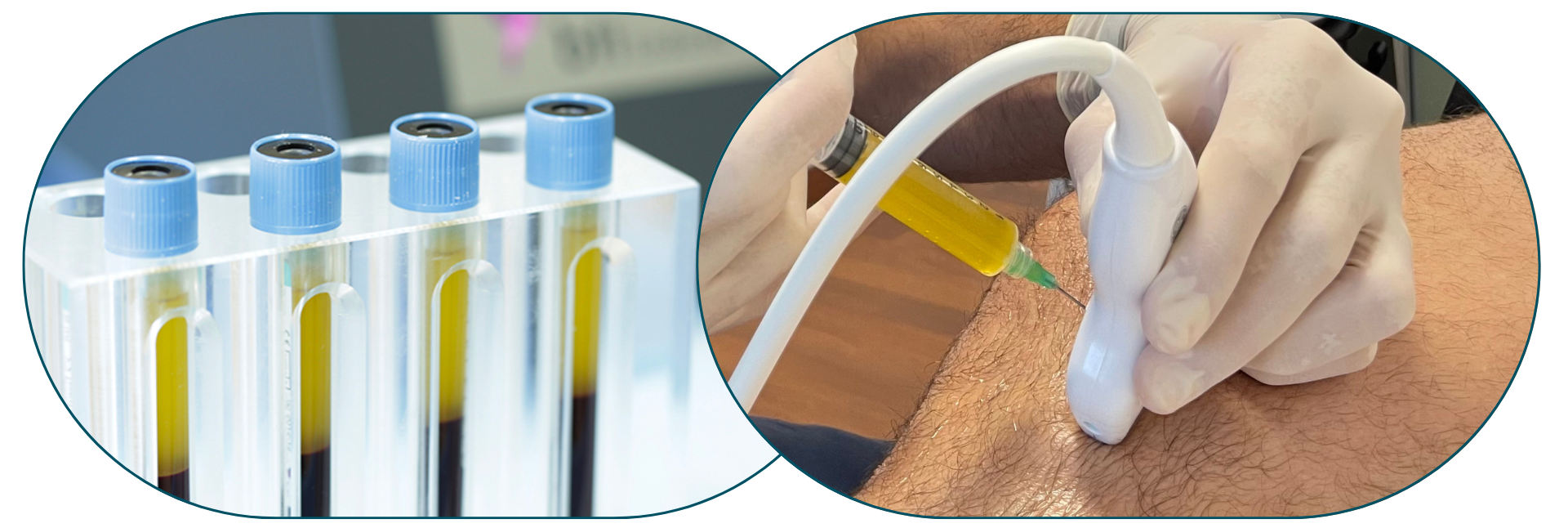
The doctor or nurse selects the fraction with the greatest regenerative capacity.
D. Ultrasound-guided infiltration
El médico inyecta el PRP directamente en el tejido lesionado, guiado por ecografía para máxima precisión.
💠 The entire procedure lasts 30-40 minutes and does not require surgery.
In which injuries is PRP – platelet-rich plasma – indicated?
1. Joint pain and osteoarthritis
PRP reduces inflammation in:
- knee
- hip
- smaller joints, with less evidence
Patients experience:
✔ Less pain
✔ Greater mobility
✔ Best feature
✔ Slower progression of osteoarthritis
2. Tendinopathies
Especially effective in chronic or degenerated tendons:
- epicondylitis (tennis elbow)
- plantar fasciitis
- patellar tendon
- Achilles tendon
- supraspinatus tendon (shoulder)
- gluteal tendon
In many cases, it avoids prolonged treatments or surgery.
3. Muscle injuries
There is less evidence, but it has been used with good results in athletes:
- Myotendinous injuries (affecting both muscle and tendon): potentially more serious injuries that require longer periods of absence from sports.
- muscle tears.
PRP can accelerate healing, reduce time off from sports, and decrease the risk of relapse.
💠 Many professional athletes use PRP to return to sport sooner and with less risk.
Main advantages of PRP – platelet-rich plasma
- Does not require surgery
- Very safe because it is autologous (from the patient's own blood), with few side effects
- Natural anti-inflammatory
- It promotes tissue repair
- Fewer risks than drug treatments
- Quick and outpatient procedure
- Faster and more functional recovery
How many PRP sessions are needed?
It depends on the patient's injury:
- joints/osteoarthritis: 3 sessions
- tendinopathies: 1–3 sessions
- muscle injuries: 1–2 sessions
The doctor will determine the ideal protocol based on the patient's progress.
Who is a good candidate for PRP?
- Athletes
- People with chronic pain
- Patients with injuries that do not improve with physiotherapy
- People who wish to avoid surgery
- Patients seeking a safe and regenerative option
Conclusion
So… is it worth it?
It depends on the case.
PRP is not a panacea, but it is a useful tool when other options have not worked, especially in injuries that have become "rebellious" over time.
We could summarize it like this: it doesn't perform miracles, but it does help the body to do better what it already knows how to do: repair.
If you're looking for a modern alternative to modulate inflammation and reduce pain, PRP is a safe option with excellent results.
Learn more about my Regenerative Medicine.
Follow me on Instagram HERE.